 SHOP MOST POPULAR
 MIXOLOGY KITS
 BESPOKE BITES
 BARWARE
 SPIRITS
 CORPORATE EVENTS
Gifting has never been easier
Perfect if you're short on time or are unable to deliver your gift yourself. Enter your message and select when to send it.

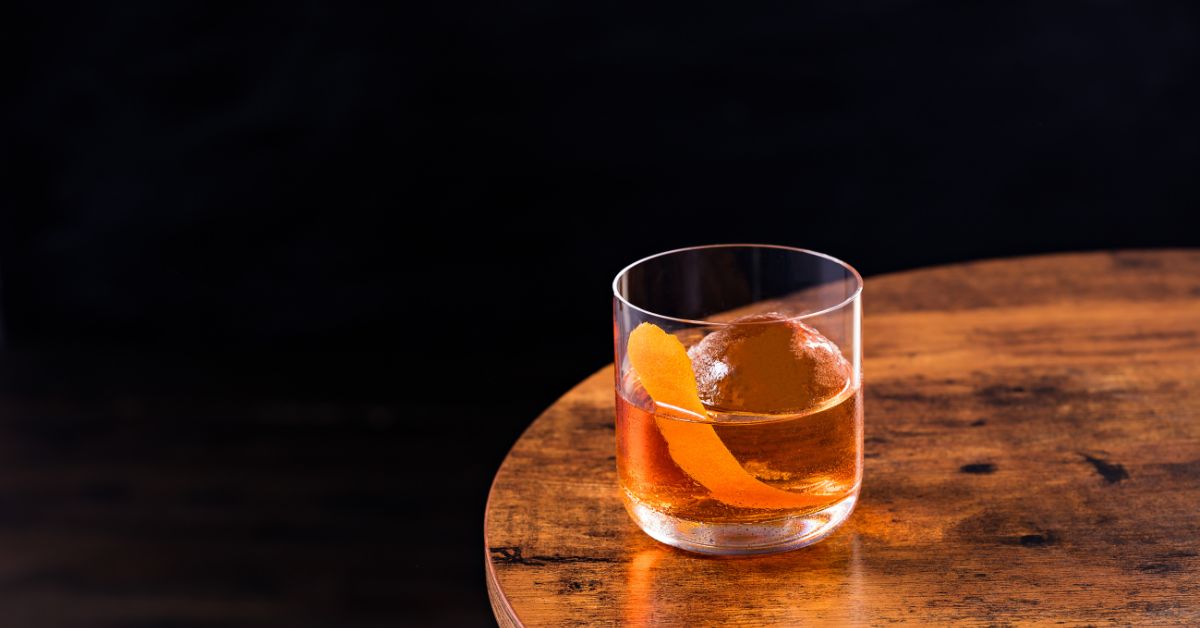

Once you start paying attention to how an Old Fashioned is built, one question comes up fairly quickly: bourbon or rye?
Both work. Both are traditional. But they take the drink in noticeably different directions and since the Old Fashioned is spirit-forward, that difference carries through to every sip.
The short answer: bourbon makes a softer, rounder Old Fashioned with a slightly sweeter finish. Rye makes a drier, spicier version with more edge. Neither is wrong. The choice depends on how you want the drink to feel.
In a lot of cocktails, the spirit plays a supporting role. Citrus, syrups, and other ingredients do much of the heavy lifting, and the whiskey adds depth in the background.
The Old Fashioned doesn't work that way. It's a spirit-forward drink, meaning the whiskey is the foundation, and everything else works around it. The sweetener softens the edges. The bitters add structure. The citrus oil adds aroma. But none of those elements carry the drink on their own.
When you change the whiskey, you're not adjusting one variable. You're shifting the character of the entire cocktail.
| Bourbon | Rye | |
|---|---|---|
| Mash Bill | At least 51% corn | At least 51% rye grain |
| Flavor Profile | Softer, slightly sweet, rounded | Drier, spicier, more structured |
| Finish | Smooth, warm | Sharper, more pronounced |
| Old Fashioned Result | Approachable, easy-drinking | Drier, more complex, more edge |
| Classic Cocktails | Old Fashioned, Mint Julep, Boulevardier | Old Fashioned, Manhattan, Sazerac |
Bourbon’s character is rooted in its origins. Developed in Kentucky in the late 1700s, it’s created from a mash bill that must include at least 51% corn. That corn-heavy grain bill is where much of bourbon's signature character comes from, a natural sweetness that carries through distillation and becomes more pronounced after aging in new charred oak barrels.
In an Old Fashioned, that translates to a drink that feels rounded from the first sip. The vanilla and caramel notes that come through in most bourbons work naturally alongside the demerara syrup, and the overall profile feels cohesive; smooth, warm, without much tension. The sweetness in the whiskey and the sweetness from the syrup point in the same direction.
That quality makes bourbon the more approachable starting point, especially if you're still getting used to spirit-forward drinks. The edges are softer, the flavor is more immediately familiar, and the drink has an easy-drinking quality that doesn't require much adjustment.
Most classic cocktail bars default to bourbon for an Old Fashioned. Buffalo Trace and Maker's Mark are common choices, both bring enough character to hold up in the drink without overpowerin g the other elements.

Rye whiskey has roots in the Northeast and Mid-Atlantic, where rye grain was more readily available than corn in the early days of American distilling. A mash bill that's predominantly rye produces a naturally drier, spice-forward spirit.
In an Old Fashioned, rye changes the dynamic. The sweetness from the syrup is still there, but it feels more restrained. The rye's drier character pushes back against it rather than blending with it. The result is a drink with more defined edges: a bit more spice, a slightly sharper finish, and a flavor profile that feels more complex.
Rye also sits closer to the drink's historical roots; many early versions of the cocktail were built on rye before bourbon became the default. Rye old fashioneds are a common choice in many classic craft cocktail bars today.
Rittenhouse Rye and Willett Rye are reliable choices here, both have enough rye character to shift the drink noticeably without being so aggressive that the other ingredients get lost.

The format of the cocktail stays exactly the same regardless of which whiskey you choose; same ratios, same technique, same proportions. What changes is the experience of drinking it.
A bourbon Old Fashioned tends to feel more relaxed. The flavors fit together easily, and the drink has a warmth that unfolds gradually. It's the kind of cocktail that feels comfortable from the first sip.
A rye Old Fashioned has more tension in the best sense. The spice and the sweetness don't fully merge, they push against each other in a way that keeps the drink interesting from one sip to the next. It asks a little more of the drinker, and it rewards attention.
Neither is a better cocktail. They're genuinely different experiences built from the same four ingredients.
If you're newer to spirit-forward cocktails or making an Old Fashioned for a group with mixed preferences, bourbon is the safer starting point. Its softer profile is more universally approachable, and it leaves less room for the drink to feel sharp or uneven.
If you already drink whiskey regularly and prefer something with more complexity and less sweetness, rye is worth trying. The shift is noticeable, and once you've had a well-made rye Old Fashioned, it's hard not to see it as a different cocktail entirely.
The most useful thing you can do is make the same recipe back-to-back with each; same ratios, same technique, same everything except the whiskey. The difference becomes immediately clear, and you'll know which direction you prefer.
Because the Old Fashioned is so minimal, ingredient quality has nowhere to hide. This applies to the whiskey more than anything else.
You don't need to reach for the most expensive bottle on the shelf. But a whiskey that tastes rough on its own will taste rough in the drink, the sweetener and bitters soften things slightly, but they don't fix a spirit that isn't working. A mid-range bottle you actually enjoy sipping neat will produce a better Old Fashioned than a premium bottle you're indifferent to.
Both have historical precedent. Early versions of the cocktail were often made with rye, which was the dominant American whiskey before Prohibition. Bourbon became the more common default over the 20th century, particularly after Kentucky distillers rebuilt post-Prohibition. Today, either is considered traditional.
Most mid-range bourbons and ryes work well. Look for something with enough character to hold up in a spirit-forward drink, something you'd enjoy on its own. Very light or very heavily peated whiskeys tend to get lost or overwhelmed. Buffalo Trace, Maker's Mark, Rittenhouse Rye, and Bulleit Rye are all reliable starting points.
The standard ratio stays the same: 2 oz whiskey, ¼ oz demerara syrup, 2 dashes bitters. Some drinkers reduce the sweetener slightly when using bourbon, since bourbon already carries more natural sweetness. It's a small adjustment worth experimenting with once you've made the base recipe a few times.
A bourbon Old Fashioned is softer and slightly sweeter, with vanilla and caramel notes that blend naturally with the syrup. A rye Old Fashioned is drier and spicier, with more edge and a more complex, structured finish. Both use the same recipe, the whiskey alone creates the difference.
High-rye bourbons — bourbons with a higher-than-average rye content in their mash bill, sit between the two styles. They carry bourbon's smoothness but with more spice than a standard bourbon. Four Roses Single Barrel and Knob Creek are examples. They're a good middle-ground option if you want characteristics of both.
Bourbon and rye don't compete in an Old Fashioned, they lead to different drinks. Bourbon takes the cocktail somewhere soft and rounded. Rye takes it somewhere drier and more structured. The right choice depends on which direction you want to go.
If you want to remove the guesswork on everything else — the sweetener, the bitters, the ratios — The Mixologer's Old Fashioned cocktail kits come with everything pre-portioned and balanced. You still choose the whiskey. The rest is already dialed in.