 SHOP MOST POPULAR
 MIXOLOGY KITS
 BARWARE
 SPIRITS
 CONTACT US
Gifting has never been easier
Perfect if you're short on time or are unable to deliver your gift yourself. Enter your message and select when to send it.


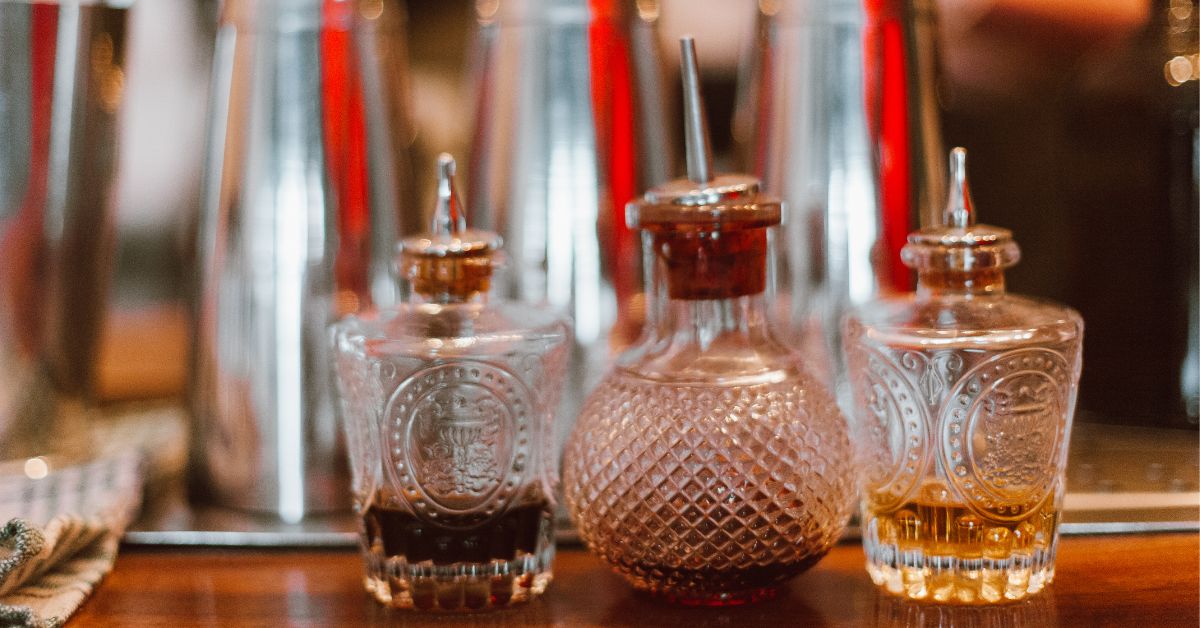

Cocktail bitters are one of the most common ingredients in classic cocktail recipes and one of the least understood. Most people who follow a recipe that calls for “two dashes of Angostura” add them without knowing what they’re actually doing to the drink.
Cocktail bitters are concentrated herbal extracts made by infusing botanicals, herbs, spices, roots, bark, and citrus peels, into high-proof alcohol. Used in small amounts, typically two to three dashes, they add aromatic complexity, depth, and structure to a cocktail without contributing noticeable flavor of their own. They’re not there to taste like anything in particular. They’re there to make everything else taste better.
This guide covers what bitters are, where they came from, the most common types, and how to use them correctly.

Bitters weren’t invented for cocktails. In the early 1800s, they were sold as medicinal tonics, concentrated botanical extracts believed to support digestion, settle the stomach, and treat a range of ailments. Angostura bitters, still the most widely used aromatic bitters today, were created in 1824 by a German physician named Johann Gottlieb Benjamin Siegert while serving as Surgeon General in Venezuela. He named them after the town of Angostura, now called Ciudad Bolívar.
Their migration from medicine cabinet to bar happened gradually. By 1806, one of the earliest published definitions of a “cocktail” already included bitters alongside spirit, sugar, and water, the same four-element structure that became the Old Fashioned. As cocktail culture developed through the 19th century, bitters became a standard tool behind the bar, less for their supposed medicinal properties and more for what they did to a drink’s flavor.
Today, cocktail bitters are available in a wide range of styles. Classic options like aromatic and orange bitters remain the most widely used, but more modern variations include flavors like chocolate, coffee, lavender, and even walnut. Each one brings a slightly different character, but the role stays the same.
The bottles look different and there are far more varieties today, but bitters still serve the same function they did in 1824.
Most cocktail recipes call for just a few dashes of bitters, often two or three at most, It’s easy to assume they’re a minor detail.
In a spirit-forward cocktail, though, bitters do real structural work. They add aromatic complexity, a dry, herbal, spiced layer that gives the drink depth without contributing a flavor that competes with the spirit. The sweetness from the syrup feels more refined with bitters present. The whiskey feels more integrated. The finish lingers longer and feels more complete.
The clearest way to understand what bitters contribute is to make the same cocktail without them. An Old Fashioned without bitters is sweetened whiskey, not bad, but one-dimensional. With two dashes of Angostura, it becomes a cocktail. The bitters don’t announce themselves, but their absence is immediately noticeable.
That’s what makes them easy to underestimate. They work quietly, shaping the drink from the background rather than the foreground.

| Bitters | Flavor Profile | Classic Use Cases |
|---|---|---|
| Angostura Aromatic | Clove, cinnamon, spice, herbal | Old Fashioned, Manhattan, Champagne cocktail |
| Peychaud’s Aromatic | Lighter, floral, anise-forward | Sazerac, Vieux Carré |
| Orange Bitters | Bright citrus, slightly bitter | Martini, Manhattan, Negroni |
| Mole / Chocolate Bitters | Dark chocolate, spice | Mezcal cocktails, dark spirit builds |
| Cardamom Bitters | Floral, slightly sweet spice | Modern builds, gin cocktails |
| Coffee Bitters | Roasted, slightly bitter | Espresso Martini variations, whiskey cocktails |
Angostura is the default, the bitters most recipes mean when they just say “bitters.” Its flavor is complex and warm: clove-forward, with cinnamon, gentian root, and a range of other botanicals that give it a distinct spiced character. In an Old Fashioned or Manhattan, it adds depth and a dry finish that pulls the drink together.
The bottle is recognizable by its oversized paper label, which is intentional, legend holds that when the Siegert brothers entered Angostura into a competition in 1862, they forgot to source a properly sized label and used what they had. They won the competition, and the oversized label became part of the brand identity.
Peychaud’s is lighter and more floral than Angostura, with a prominent anise note. It’s the bitters of choice for a Sazerac and plays a key role in several New Orleans classics. In an Old Fashioned, some bartenders use a combination of Angostura and Peychaud’s — the Angostura for structure, the Peychaud’s for a floral lift.
Orange bitters were actually more common than aromatic bitters in the late 19th century before largely disappearing for most of the 20th. They’ve since come back into wide use. Regans’ Orange Bitters No. 6 and Fee Brothers West Indian Orange Bitters are two of the most common. In a Manhattan or a Martini, orange bitters add a bright citrus note that lifts the drink without adding sweetness.
The standard for most cocktail recipes is 2 dashes. A dash from a dasher-top bottle is roughly 0.6 ml, so two dashes amounts to just over a milliliter. That’s intentionally small, bitters at full concentration are intensely flavored, and the goal is influence, not presence.
Starting with 2 dashes and adjusting from there is the right approach. Some drinkers prefer 3 dashes of Angostura in an Old Fashioned for a slightly more pronounced spice note. Going beyond that tends to tip the drink into bitterness that competes with the spirit.

In a built cocktail like an Old Fashioned, bitters go in first, before the sweetener and before the whiskey. Adding them directly to the glass lets them coat the bottom before the other ingredients are poured over, which helps them distribute evenly through the drink during stirring.
In shaken cocktails, the order matters less since shaking distributes everything evenly. But bitters are still added before the ice, along with the other ingredients.
Bitters have a very high alcohol content, typically 35–45% ABV, which acts as a natural preservative. An opened bottle keeps essentially indefinitely at room temperature, away from direct sunlight. There’s no need to refrigerate them.
Bitters appear in a wide range of classic cocktails, but they’re most prominent (and most important) in spirit-forward drinks with minimal ingredients. The Old Fashioned, Manhattan, Sazerac, and Vieux Carré all depend on bitters to provide the aromatic structure that keeps the drink from feeling flat.
In longer, more citrus-driven cocktails, a Gin & Tonic, a Mojito, a Daiquiri, bitters are sometimes used, but they’re less essential. The citrus and other ingredients provide enough complexity on their own that bitters become more of a finishing touch than a structural element.
The principle is similar to demerara syrup: the simpler and more spirit-forward the cocktail, the more noticeable and important the bitters become.
On their own, bitters taste intensely herbal, bitter, and aromatic, they’re not pleasant to drink straight. But in a cocktail at 2 dashes, that intensity translates to depth and complexity rather than bitterness. Angostura specifically tastes of clove, cinnamon, and warm spice. Orange bitters taste of concentrated citrus peel with a dry finish.
Yes. Most cocktail bitters are 35–45% ABV, similar to many spirits. Because only a few dashes are used per drink, the amount of alcohol they contribute is negligible — roughly equivalent to adding a few drops of water.
Angostura is heavier and more complex, with a prominent clove and spice character. Peychaud’s is lighter and more floral, with a noticeable anise note. Angostura is the more versatile of the two and works in a wider range of cocktails. Peychaud’s is particularly associated with New Orleans classics like the Sazerac.
Technically yes, but it changes the drink significantly. Without bitters, an Old Fashioned is sweetened whiskey with a citrus garnish — it lacks the aromatic structure and dry finish that bitters provide. Most bartenders would consider the result incomplete. The bitters are part of what makes it a cocktail rather than just a sweetened spirit.
They overlap but aren’t identical. Cocktail bitters and digestive bitters (like Campari or Aperol) are both botanical extracts, but digestive bitters are meant to be consumed in larger amounts, as an aperitif or digestif, and are significantly less concentrated. Cocktail bitters are used only a few dashes at a time because of how concentrated they are.
Bitters are the smallest ingredient in most cocktail recipes and the easiest to underestimate. Two dashes doesn’t look like much. But in a spirit-forward drink with four ingredients, that small amount does real work, adding the aromatic complexity and dry structure that keeps the drink from falling flat.
The Mixologer’s Old Fashioned cocktail kits include Angostura bitters pre-measured alongside the whiskey and demerara syrup, so every element is already in the right proportion. The structure is built in from the start.
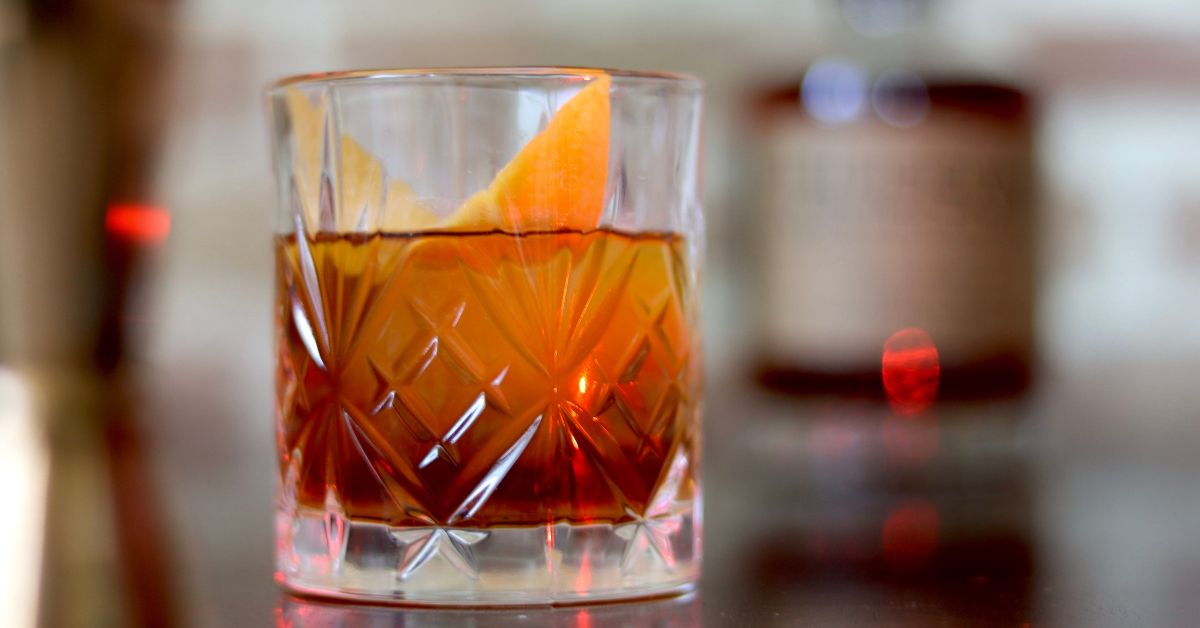

The Old Fashioned is one of the most searched cocktail recipes, but it’s more than just a cocktail. It’s one of the foundations of cocktail culture itself.
In fact, the earliest definition of a “cocktail” dates back to 1806, described simply as a mix of spirit, sugar, water, and bitters. That exact formula is what eventually became the Old Fashioned.
The now infamous name tells the history of the drink.
By the 1860s cocktail trends began to change and bartenders were experimenting with more ingredients and different flavor profiles. They layered liqueurs, elaborate syrups, and combinations that moved the concept of a cocktail far from it’s original four-ingredient form.
What we now refer to as "the old fashioned" fell out of style. But by the 1880s customers longed for simpler cocktails. No fancy liquers or excessive embellishments, they began ordering whiskey cocktails "the old-fashioned way," with whiskey, sugar, bitters, and water
The drink that came from that request eventually took the phrase as its own name.
What those customers were asking for is what we call an old fashioned today; 2 oz whiskey, a small amount of sweetener, two dashes of bitters, and a strip of citrus peel. Build it over ice, stir until cold, and express the peel over the top.
This guide covers the full method, the right proportions, and the details that matter, like why dilution isn't just a side effect of stirring, and why the sweetener you choose shapes the drink more than you'd expect.

Makes: 1 cocktail
Glass: Rocks glass (lowball)
Technique: Build and stir
1.5-2 oz bourbon or rye whiskey
.25 oz demarara syrup
2-3 dashes orange or Angostora Bitters
1 Orange peel/twist
1 Large clear ice cube
1. Add demerara syrup and bitters (no ice yet)
Add a small amount of demerara syrup to a glass (a cocktail mixing glass if you have one), followed by 2–3 dashes of bitters.
This sets the foundation of the drink and ensures the sweetness is already fully integrated.
2. Add whiskey
Pour in your whiskey, bourbon or rye depending on your preference.
In an Old Fashioned, the whiskey sets the direction of the drink, shaping the overall profile.
3. Add ice and stir
Add a large clear ice cube, then stir gently for about 20–30 seconds.
This chills the drink and introduces controlled dilution. Larger, denser ice melts more slowly, helping maintain the structure of the drink.
Shaking isn’t used here, as it over-aerates the liquid and disrupts the texture. Stirring keeps everything smooth and integrated.
4. Express citrus oils
Take an orange peel and express the oils over the glass, then drop it in.
This adds aroma and a final layer to the drink.
5. Adjust and serve
Give it a final taste and adjust if needed.
* The steps are simple, but details like dilution, ice, and ingredient balance are what shape the final result.
For a more consistent approach, use an Old Fashioned cocktail kit or cocktail kit for home, where the ingredients are already balanced and portioned to bring the drink together the way it’s intended.

At it’s core the old fashioned is a spirit-forward cocktail built on four elements: whiskey, sweetener, bitters, and citrus oil. That’s it. A simple structure that’s stayed relevant for over a century.
It’s remained a staple on cocktail menus around the world. You’ll find it everywhere from neighborhood cocktail spots to high-end bars, and it’s been a go-to across generations. A longtime favorite of real and fictional figures alike, including Frank Sinatra and Don Draper.
A great Old Fashioned is built around a simple idea: The whiskey is the star, and everything else works around it.
The sweetness softens the edges without taking over. Bitters add structure and aroma without calling attention to themselves. Even dilution, something most people don’t think about, plays a role in bringing the drink into harmony.
When you get the ratios right and it all comes together, the result feels smooth, intentional, and complete.
Before anything else, the whiskey sets the direction of the drink. Because an Old Fashioned is spirit-forward, that choice shapes everything that follows.
Bourbon and rye each create a different expression of the same cocktail. Neither is better, it simply comes down to preference.
Bourbon brings a softer, rounder character with vanilla and caramel notes. It works naturally with the sweetener and makes for an approachable, easy-drinking Old Fashioned. If you're newer to spirit-forward cocktails, bourbon is a natural starting point.
Rye is drier and spicier. It has a sharper profile that sits closer to the drink's historical roots, and it produces a less sweet, more complex result. If you want something with more edge, rye changes the character noticeably.
Neither is the "right" choice. The same recipe made with each produces two distinct but equally valid drinks. Worth trying both. More about bourbon and rye in our blog here.
This is one of the most overlooked details in the recipe.
A basic sugar cube technically works, but it doesn't always fully dissolve during stirring, collecting at the bottom of the drink instead of blending into it. The result can feel uneven from sip to sip. One moment it's fine, then the final third of the drink is noticeably sweeter.
Demerara syrup, made from raw cane sugar, blends more completely and adds a subtle warmth and depth that plain white sugar doesn't have. It blends more seamlessly, adding a subtle depth and warmth that rounds out the drink. It’s a small upgrade that changes the entire experience.
Simple syrup works in a pinch. But once you've made an Old Fashioned with good demerara, the difference is hard to ignore. More on how demerara syrup compares to other sweeteners in our blog post here.
Bitters are easy to underestimate. They’re used in such small amounts that they can feel almost optional. But they’re often what separates a drink that tastes fine from one that feels complete.
Two dashes doesn't look like much. It's barely a teaspoon. But bitters are what give the Old Fashioned its structure.
They add aromatic complexity, a dry, herbal, spiced undertone, that keeps the drink from feeling one-dimensional. Without them, you have sweetened whiskey. With them, you have a cocktail. Angostura is the standard choice for good reason: its clove and spice profile works with both bourbon and rye without competing with either.
You may not consciously notice bitters when they're in the glass. You'll notice when they're missing. More about bitters in our blog post here.
Stirring for 20–30 seconds isn't about getting the drink cold. It's about dilution.
As the ice melts slightly during stirring, it softens the alcohol's edge and helps the whiskey, sweetener, and bitters knit together. A drink that's stirred properly feels smoother and more cohesive than one that's poured over ice and left alone. The ingredients don't just coexist, they integrate.
Under-stir, and the drink feels sharp. Over-stir, and it becomes watery. Thirty seconds at a calm, steady pace is the window.

Most disappointing versions don't fail dramatically, they just feel slightly off. The sweetness takes over and the whiskey disappears. Or the drink feels sharp and disconnected, like the ingredients never settled together. Or there's depth missing, and you can't quite name why.
In most cases it comes down to one of three things: the ratios are off (usually too much sweetener), the sweetener didn't integrate (sugar cube problem), or there wasn't enough stirring. Getting those three details right accounts for most of the difference between a fine Old Fashioned and a great one.
The Old Fashioned has lasted because the formula works. Four elements, the right ratios, and a little patience in the stirring, that's the whole recipe.
The challenge isn't complexity. It's getting the details right consistently: the sweetener that integrates properly, the bitters that add structure without dominating, the stirring that brings it together.
If you'd rather start with ingredients that are already dialed in, The Mixologer's Old Fashioned cocktail kits come with everything pre-portioned and balanced; the whiskey, the demerara syrup, the bitters. Everything in the right ratio, ready to build.
Bourbon is the most common choice, its softer, sweeter profile works naturally with the drink's other elements. Rye is a drier, spicier alternative that produces a less sweet, more complex result. Both work well. Avoid anything too heavily peated or too delicate, as the other ingredients can easily overpower it.
Yes, and many bartenders prefer it that way. Demerara syrup blends more completely than a sugar cube and adds a subtle warmth that plain simple syrup doesn't have. If you don't have demerara, regular simple syrup works. A sugar cube is traditional, but inconsistent dissolution is a real drawback.
Stirring keeps the drink clear and controls dilution. Shaking aerates the cocktail, dilutes it more aggressively, and creates a cloudy texture that doesn't suit a spirit-forward drink. Spirit-forward cocktails are always stirred, the goal is integration, not emulsification.
Expressing means twisting the peel to release the oils from the skin over the drink. You're not adding juice; you're misting aromatic citrus oils across the surface, which adds a bright, fragrant note to the aroma without changing the flavor of the liquid.
One large cube is ideal. It melts more slowly than standard cubes, which means slower dilution and better control over the drink as you sip it. If you don't have a large cube, 3–4 standard cubes work fine just drink it at a slightly faster pace.
Yes. At 2 oz of whiskey with minimal dilution, the alcohol content stays high, typically around 30–35% ABV in the glass. It's meant to be sipped slowly, not consumed quickly.
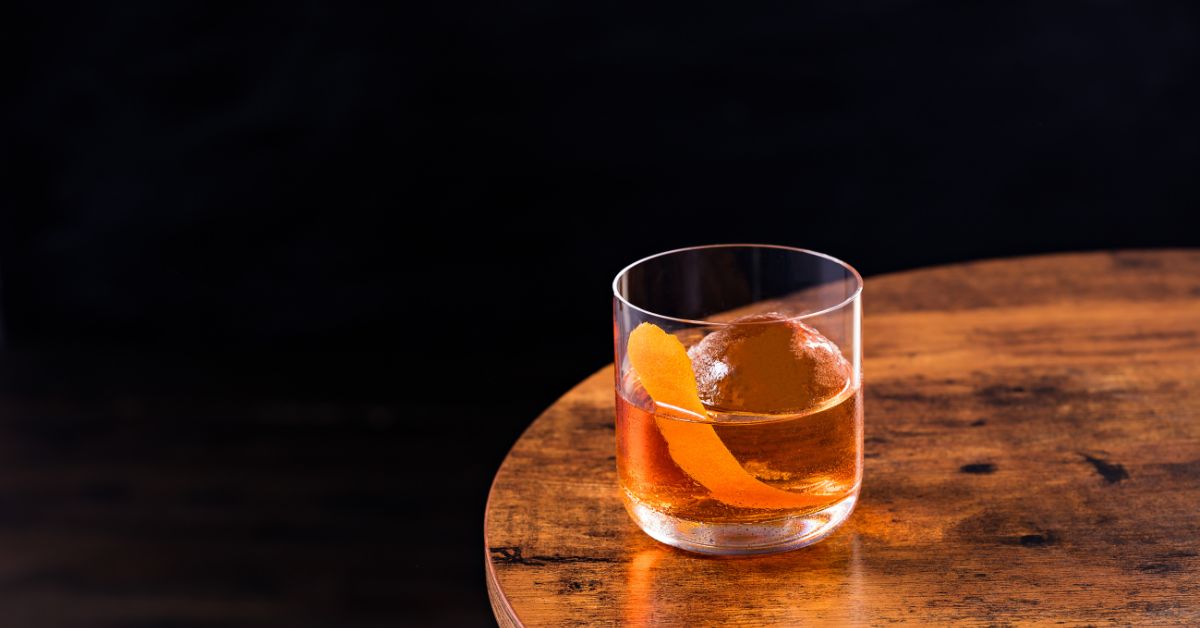

Once you start paying attention to how an Old Fashioned is built, one question comes up fairly quickly: bourbon or rye?
Both work. Both are traditional. But they take the drink in noticeably different directions and since the Old Fashioned is spirit-forward, that difference carries through to every sip.
The short answer: bourbon makes a softer, rounder Old Fashioned with a slightly sweeter finish. Rye makes a drier, spicier version with more edge. Neither is wrong. The choice depends on how you want the drink to feel.
In a lot of cocktails, the spirit plays a supporting role. Citrus, syrups, and other ingredients do much of the heavy lifting, and the whiskey adds depth in the background.
The Old Fashioned doesn't work that way. It's a spirit-forward drink, meaning the whiskey is the foundation, and everything else works around it. The sweetener softens the edges. The bitters add structure. The citrus oil adds aroma. But none of those elements carry the drink on their own.
When you change the whiskey, you're not adjusting one variable. You're shifting the character of the entire cocktail.
| Bourbon | Rye | |
|---|---|---|
| Mash Bill | At least 51% corn | At least 51% rye grain |
| Flavor Profile | Softer, slightly sweet, rounded | Drier, spicier, more structured |
| Finish | Smooth, warm | Sharper, more pronounced |
| Old Fashioned Result | Approachable, easy-drinking | Drier, more complex, more edge |
| Classic Cocktails | Old Fashioned, Mint Julep, Boulevardier | Old Fashioned, Manhattan, Sazerac |
Bourbon’s character is rooted in its origins. Developed in Kentucky in the late 1700s, it’s created from a mash bill that must include at least 51% corn. That corn-heavy grain bill is where much of bourbon's signature character comes from, a natural sweetness that carries through distillation and becomes more pronounced after aging in new charred oak barrels.
In an Old Fashioned, that translates to a drink that feels rounded from the first sip. The vanilla and caramel notes that come through in most bourbons work naturally alongside the demerara syrup, and the overall profile feels cohesive; smooth, warm, without much tension. The sweetness in the whiskey and the sweetness from the syrup point in the same direction.
That quality makes bourbon the more approachable starting point, especially if you're still getting used to spirit-forward drinks. The edges are softer, the flavor is more immediately familiar, and the drink has an easy-drinking quality that doesn't require much adjustment.
Most classic cocktail bars default to bourbon for an Old Fashioned. Buffalo Trace and Maker's Mark are common choices, both bring enough character to hold up in the drink without overpowerin g the other elements.

Rye whiskey has roots in the Northeast and Mid-Atlantic, where rye grain was more readily available than corn in the early days of American distilling. A mash bill that's predominantly rye produces a naturally drier, spice-forward spirit.
In an Old Fashioned, rye changes the dynamic. The sweetness from the syrup is still there, but it feels more restrained. The rye's drier character pushes back against it rather than blending with it. The result is a drink with more defined edges: a bit more spice, a slightly sharper finish, and a flavor profile that feels more complex.
Rye also sits closer to the drink's historical roots; many early versions of the cocktail were built on rye before bourbon became the default. Rye old fashioneds are a common choice in many classic craft cocktail bars today.
Rittenhouse Rye and Willett Rye are reliable choices here, both have enough rye character to shift the drink noticeably without being so aggressive that the other ingredients get lost.

The format of the cocktail stays exactly the same regardless of which whiskey you choose; same ratios, same technique, same proportions. What changes is the experience of drinking it.
A bourbon Old Fashioned tends to feel more relaxed. The flavors fit together easily, and the drink has a warmth that unfolds gradually. It's the kind of cocktail that feels comfortable from the first sip.
A rye Old Fashioned has more tension in the best sense. The spice and the sweetness don't fully merge, they push against each other in a way that keeps the drink interesting from one sip to the next. It asks a little more of the drinker, and it rewards attention.
Neither is a better cocktail. They're genuinely different experiences built from the same four ingredients.
If you're newer to spirit-forward cocktails or making an Old Fashioned for a group with mixed preferences, bourbon is the safer starting point. Its softer profile is more universally approachable, and it leaves less room for the drink to feel sharp or uneven.
If you already drink whiskey regularly and prefer something with more complexity and less sweetness, rye is worth trying. The shift is noticeable, and once you've had a well-made rye Old Fashioned, it's hard not to see it as a different cocktail entirely.
The most useful thing you can do is make the same recipe back-to-back with each; same ratios, same technique, same everything except the whiskey. The difference becomes immediately clear, and you'll know which direction you prefer.
Because the Old Fashioned is so minimal, ingredient quality has nowhere to hide. This applies to the whiskey more than anything else.
You don't need to reach for the most expensive bottle on the shelf. But a whiskey that tastes rough on its own will taste rough in the drink, the sweetener and bitters soften things slightly, but they don't fix a spirit that isn't working. A mid-range bottle you actually enjoy sipping neat will produce a better Old Fashioned than a premium bottle you're indifferent to.
Both have historical precedent. Early versions of the cocktail were often made with rye, which was the dominant American whiskey before Prohibition. Bourbon became the more common default over the 20th century, particularly after Kentucky distillers rebuilt post-Prohibition. Today, either is considered traditional.
Most mid-range bourbons and ryes work well. Look for something with enough character to hold up in a spirit-forward drink, something you'd enjoy on its own. Very light or very heavily peated whiskeys tend to get lost or overwhelmed. Buffalo Trace, Maker's Mark, Rittenhouse Rye, and Bulleit Rye are all reliable starting points.
The standard ratio stays the same: 2 oz whiskey, ¼ oz demerara syrup, 2 dashes bitters. Some drinkers reduce the sweetener slightly when using bourbon, since bourbon already carries more natural sweetness. It's a small adjustment worth experimenting with once you've made the base recipe a few times.
A bourbon Old Fashioned is softer and slightly sweeter, with vanilla and caramel notes that blend naturally with the syrup. A rye Old Fashioned is drier and spicier, with more edge and a more complex, structured finish. Both use the same recipe, the whiskey alone creates the difference.
High-rye bourbons — bourbons with a higher-than-average rye content in their mash bill, sit between the two styles. They carry bourbon's smoothness but with more spice than a standard bourbon. Four Roses Single Barrel and Knob Creek are examples. They're a good middle-ground option if you want characteristics of both.
Bourbon and rye don't compete in an Old Fashioned, they lead to different drinks. Bourbon takes the cocktail somewhere soft and rounded. Rye takes it somewhere drier and more structured. The right choice depends on which direction you want to go.
If you want to remove the guesswork on everything else — the sweetener, the bitters, the ratios — The Mixologer's Old Fashioned cocktail kits come with everything pre-portioned and balanced. You still choose the whiskey. The rest is already dialed in.