 SHOP MOST POPULAR
 MIXOLOGY KITS
 BARWARE
 SPIRITS
 CONTACT US
Gifting has never been easier
Perfect if you're short on time or are unable to deliver your gift yourself. Enter your message and select when to send it.



If you’ve come across demerara syrup in a cocktail recipe and weren’t sure what it was or whether it was worth tracking down, the short answer is: it’s worth it.
Demerara syrup is a liquid sweetener made from demerara sugar, a minimally refined raw cane sugar, dissolved in water. It’s richer and more complex than plain simple syrup, with a subtle molasses depth that integrates into spirit-forward cocktails in a way that regular sugar doesn’t. In a drink like an Old Fashioned, it’s often the detail that separates a cocktail that tastes fine from one that feels complete.
This guide covers what demerara syrup is, how it’s different from other sweeteners, how to make it at home, and when it’s worth using over simpler alternatives.

Demerara sugar is a raw cane sugar with large, golden-brown crystals and a natural molasses content that standard white sugar has had refined out of it. It originated in the Demerara region of what is now Guyana, though today it’s produced in several countries and widely available.
The key difference between demerara and white sugar is refinement. White sugar goes through a process that strips out nearly all of its natural molasses, leaving a clean, neutral sweetness. Demerara sugar skips much of that process, which preserves the molasses, and with it, a deeper, more rounded flavor that carries through into whatever you use it in.
When you dissolve demerara sugar into water to make a syrup, that character comes with it. The result is a sweetener with a warm, slightly complex flavor that does more than just add sweetness.

| Sweetener | Flavor Profile | Consistency in Drink | Best For |
|---|---|---|---|
| Sugar Cube | Neutral, lightly sweet | Can be uneven if not fully dissolved | Traditional preparations |
| Simple Syrup (1:1) | Clean, straightforward | Fully integrates, consistent | Highballs, sours, lighter cocktails |
| Demerara Syrup (2:1) | Richer, slightly molasses-forward, more depth | Fully integrates with added complexity | Old Fashioned, Manhattan, spirit-forward cocktails |
| Honey Syrup | Floral, distinctly flavored | Integrates well | Bees Knees, Gold Rush, whiskey sours |
The main practical difference between demerara syrup and simple syrup is flavor depth. Simple syrup adds sweetness cleanly and gets out of the way. Demerara syrup adds sweetness and a subtle warmth that supports the other ingredients, particularly in spirit-forward drinks where there aren’t many other flavors to fill that space.
The difference between demerara syrup and a sugar cube is more about consistency. A sugar cube doesn’t always fully dissolve during stirring, which can leave the sweetness uneven from one sip to the next. Demerara syrup integrates completely, so the flavor stays consistent throughout the drink.

In a drink like an Old Fashioned, sweetness does more than soften the alcohol, it shapes the texture and structure of the drink. That’s where demerara syrup earns its place.
A sugar cube can work, but it doesn’t always dissolve evenly, which can make the experience feel slightly inconsistent from sip to sip. Demerara syrup blends more fully into the drink, adding a gentle warmth and depth that softens the edges without flattening the flavor.
What sets it apart isn’t just sweetness, but how it supports everything around it. There’s a slight richness, a hint of molasses depth, and a more integrated finish that brings the drink into balance without drawing attention to itself.
The difference isn’t dramatic, but it becomes easy to notice once you know what to look for.
Demerara syrup is most worth using in spirit-forward cocktails where small details tend to have a greater impact and the sweetener is a primary flavor component, not just a background note. Old Fashioneds, Manhattans, and certain rum-based drinks all benefit from that added depth, especially when the goal is balance rather than just sweetness.
In lighter, more citrus-driven cocktails like a Gin & Tonic, a Mojito, or a Daiquiri, the added complexity of demerara can sometimes work against the drink. Those cocktails tend to benefit from a cleaner sweetener that doesn’t compete with the other flavors. Simple syrup is usually the better call there.
The general principle: the more spirit-forward the cocktail, the more demerara syrup adds. The lighter and more citrus-driven, the less noticeable the difference.
Demerara syrup is sweet with a subtle, warm depth — a hint of molasses and caramel that sets it apart from plain simple syrup. It’s not strongly flavored enough to taste distinctly of molasses in a cocktail, but it adds a roundness that a neutral sweetener doesn’t.
Yes, and it works fine as a substitute in most cocktails. The flavor will be slightly cleaner and less complex, and the texture will be thinner if you use a 1:1 simple syrup. In spirit-forward cocktails like an Old Fashioned, the difference is noticeable but not disqualifying, it’s still a good drink, just a slightly less layered one.
The standard cocktail ratio is 2:1, two parts demerara sugar to one part water. This produces a richer, slightly thicker syrup than a 1:1 ratio. For spirit-forward cocktails, 2:1 is the better choice.
No, though they’re related. Brown sugar is white sugar with molasses added back in after refining. Demerara sugar is a raw sugar that retains its natural molasses content without going through full refining. In practical terms, brown sugar produces a softer, more treacle-like syrup. Demerara is drier and slightly more complex. For cocktails, demerara is the better choice.
Yes. Turbinado and demerara are both minimally refined raw cane sugars and are interchangeable for cocktail syrups. Turbinado (sold as Sugar in the Raw) is slightly less molasses-forward than true demerara, but the difference in a finished cocktail is minimal.
Demerara syrup is a small upgrade with a noticeable impact, particularly in cocktails where the sweetener plays a real structural role. The extra step of making it at home takes about five minutes, and once you’ve used it in an Old Fashioned, it’s genuinely hard to go back to a sugar cube.
If you’d rather skip the prep entirely, The Mixologer’s Old Fashioned cocktail kits include demerara syrup pre-portioned alongside the whiskey and bitters, everything already balanced, ready to build.
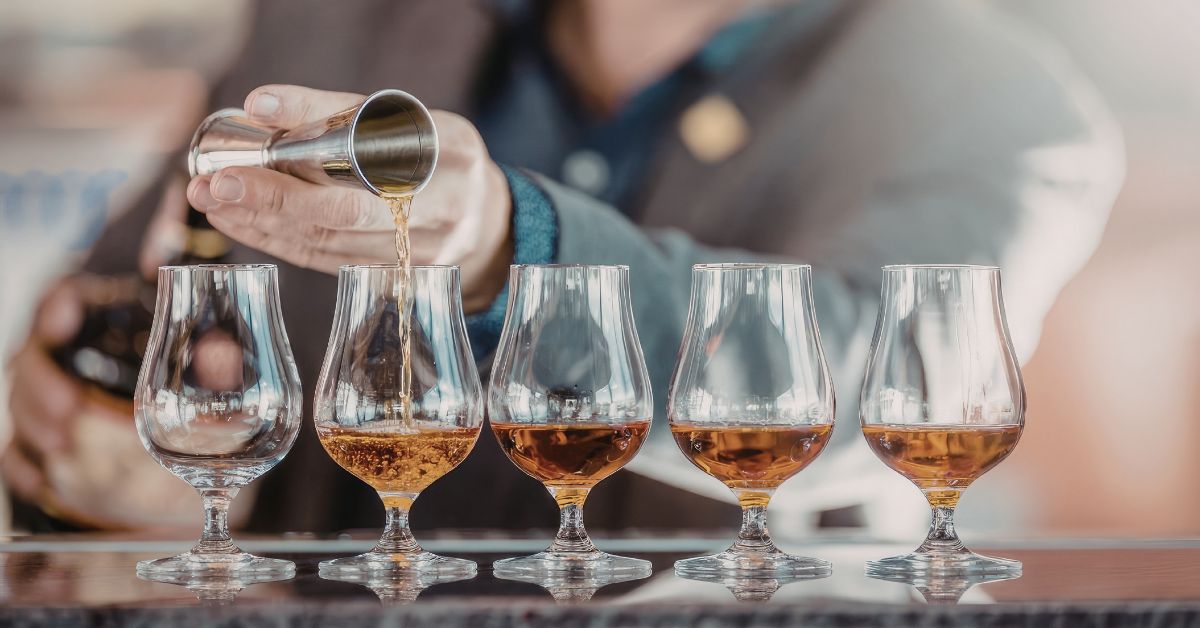

There are four types of whiskey most people encounter at a bar, bourbon, scotch, rye, and Irish, and they taste completely different from one another. The differences come down to three things: where it's made, what grains are used, and how it's aged. Once you understand those three variables, every whiskey starts to make sense.
All whiskey starts the same way: grain is fermented into a beer-like wash, distilled to increase the alcohol content, and then aged in oak barrels. That aging process is where most of the flavor comes from. The wood imparts vanilla, caramel, spice, and smoke, depending on how the barrel was treated and how long the spirit rested inside it.
The differences between types of whiskey come down to which grains are used, where it's made, and the production rules each style must follow.
Bourbon is a sweet, full-bodied American whiskey with notes of caramel, vanilla, and oak.
To legally be called bourbon, a whiskey must:
The high corn content is what gives bourbon its characteristic sweetness. The new charred oak requirement and no recycled barrels allowed, is why bourbon tends to be so rich in vanilla and caramel compared to other whiskeys.
Kentucky produces the vast majority of the world's bourbon (Maker's Mark, Wild Turkey, Woodford Reserve, Buffalo Trace), but bourbon can technically be made anywhere in the United States.
What it tastes like: Sweet up front, caramel, vanilla, sometimes a little dried fruit. Warmth through the middle. A long, slightly spicy finish that varies depending on the proof and the rye content in the mash bill.
Best for: An Old Fashioned, a Whiskey Sour, or just over a large ice cube.
Rye is an American whiskey made mostly from rye grain, drier, spicier, and more assertive than bourbon.
Like bourbon, rye whiskey must:
The shift from corn to rye changes everything about the flavor profile. Where bourbon leans sweet and mellow, rye leans dry and spicy, think black pepper, dried fruit, and baking spice. It's more aggressive, more complex, and holds up better when mixed with bold ingredients.
Rye whiskey was actually the dominant American whiskey style before Prohibition nearly wiped it out. It's had a major revival over the last decade, thanks in large part to the cocktail renaissance.
What it tastes like: Drier and more assertive than bourbon. Spice-forward, black pepper, cinnamon, sometimes a savory herbal edge. Less sweetness, more complexity.
Best for: A Manhattan or a Sazerac, cocktails where that punchy rye character is exactly what you want.

Scotch is a Scottish whisky (note the spelling, no "e") made primarily from malted barley, aged at least three years, and known for its depth and complexity, and in some regions, heavy smoke.
Scotch has strict rules too:
Scotch is the most regional of the major whisky styles. Where a bottle is from within Scotland tells you a lot about what it'll taste like.
The main Scotch regions:
What it tastes like: Highly variable by region. Generally more complex and drier than bourbon, with more obvious grain character and, depending on region, significant smoke.
Best for: Sipping neat or with a small splash of water, which opens up the aromatics considerably.

Irish whiskey is triple-distilled, made on the island of Ireland, and known for being exceptionally smooth and approachable, the easiest gateway into the whiskey world.
Irish whiskey rules:
The triple distillation process removes more of the harsher compounds, resulting in a cleaner, lighter spirit than most bourbon or Scotch. Irish whiskey rarely uses peated malt, which means it lacks the smokiness you find in Islay Scotch.
The big names like, Jameson, Redbreast, Tullamore D.E.W., Bushmills, represent a wide range from everyday sipper to serious collector bottle.
What it tastes like: Smooth, light, and approachable. Notes of green apple, honey, vanilla, and sometimes a gentle floral quality. Very little smoke.
Best for: On the rocks, with ginger beer (Irish Mule), or in a hot toddy.

| Bourbon | Rye | Scotch | Irish | |
|---|---|---|---|---|
| Country | USA | USA | Scotland | Ireland |
| Primary Grain | Corn (51%+) | Rye (51%+) | Malted barley | Barley (malted + unmalted) |
| Flavor Profile | Sweet, caramel, vanilla | Spicy, dry, peppery | Complex, earthy, sometimes smoky | Smooth, light, approachable |
| Aging Requirement | New charred oak | New charred oak | 3+ years in oak | 3+ years in oak |
| Smoke Level | None | None | Low to very high (region-dependent) | Usually none |
| Entry Point | Maker's Mark, Buffalo Trace | Rittenhouse, Bulleit Rye | Glenfiddich 12, Macallan 12 | Jameson, Redbreast 12 |
If you're new to whiskey: Start with Irish. The smoothness and approachability make it the lowest barrier to entry. Jameson on the rocks is a great first move.
If you want to make classic cocktails: Start with bourbon. An Old Fashioned or Whiskey Sour with a solid bourbon is where most people fall in love with the category.
If you already like bourbon and want more complexity: Try rye. A Manhattan made with rye instead of bourbon will show you exactly what the difference feels like in the glass.
If you want to explore something completely different: Try Scotch , start with a Speyside like Glenfiddich 12 before diving into peated Islay bottles.
No. Bourbon and scotch are two completely different whiskey styles. Bourbon is made in the United States from a corn-heavy mash bill and aged in new charred oak barrels. Scotch is made in Scotland from malted barley and aged in previously used oak casks. They share the same base category, whiskey, but share almost nothing else in terms of production or flavor.
The main difference is the primary grain. Bourbon must be at least 51% corn, which gives it a sweeter, fuller body. Rye must be at least 51% rye grain, which creates a drier, spicier, more assertive flavor. Both are made in the United States and aged in new charred oak barrels.
Scottish and Japanese producers traditionally spell it "whisky" (no e). American and Irish producers generally spell it "whiskey" (with an e). Both spellings refer to the same category of spirit, the difference is purely regional tradition and has no bearing on flavor or quality.
No. Irish whiskey is made in Ireland from a mix of malted and unmalted barley, typically triple-distilled for smoothness, and aged in used oak casks. Bourbon is made in the United States primarily from corn and aged in new charred oak barrels. They taste quite different, bourbon is richer and sweeter, Irish whiskey is lighter and smoother.
Single malt refers to a whisky made at a single distillery using 100% malted barley. It does not mean the bottle contains whisky from a single barrel, it can be blended from many barrels produced at that one distillery. Single malt Scotch is the most common use of the term, but single malt Irish whiskey and single malt American whiskey also exist.
Irish whiskey is generally the easiest starting point because of its smooth, light character. Jameson, Bushmills, or Tullamore D.E.W. are all approachable options. From there, a quality bourbon like Broken Boundaries or Buffalo Trace is the natural next step before venturing into rye or Scotch.
The four major types of whiskey, bourbon, rye, scotch, and Irish, each have their own rules, regions, and flavor identities. Bourbon is sweet and American. Rye is spicy and assertive. Scotch is complex, earthy, and sometimes smoky. Irish is smooth, light, and easy.
Start with the style that matches where you are right now, and don't be afraid to work through all four. Each one opens up a different side of what whiskey can be.
Want to start making great whiskey cocktails at home? Our Ultimate Old Fashioned Box comes with a premium bourbon chosen specifically for cocktails, everything you need, no guesswork required.
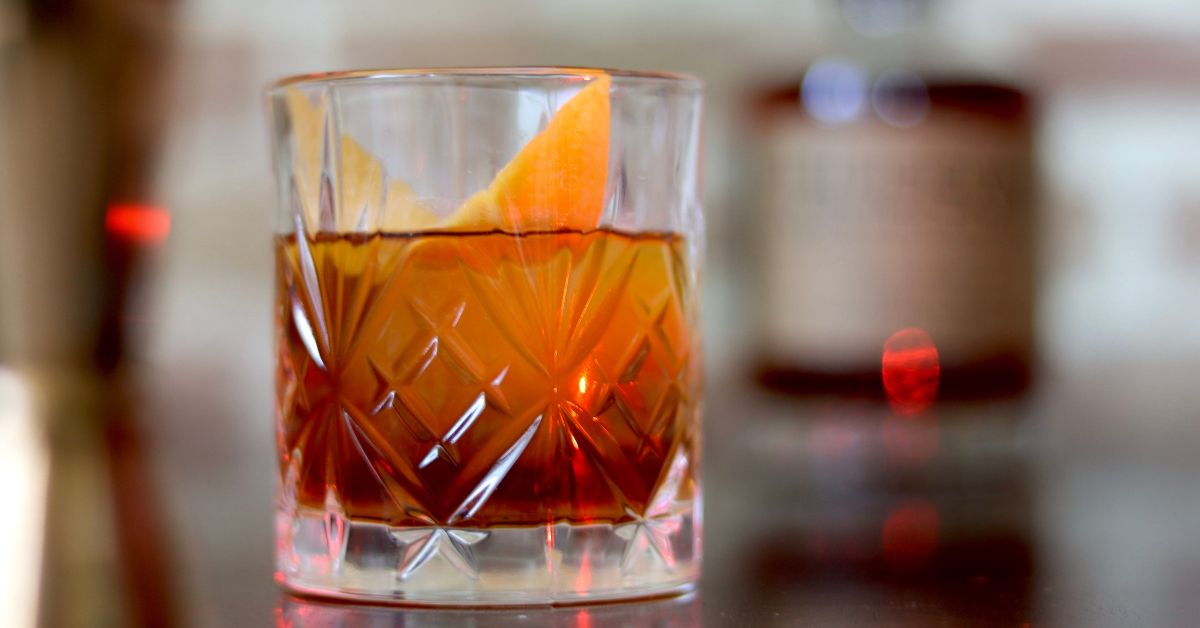

The Old Fashioned is one of the most searched cocktail recipes, but it’s more than just a cocktail. It’s one of the foundations of cocktail culture itself.
In fact, the earliest definition of a “cocktail” dates back to 1806, described simply as a mix of spirit, sugar, water, and bitters. That exact formula is what eventually became the Old Fashioned.
The now infamous name tells the history of the drink.
By the 1860s cocktail trends began to change and bartenders were experimenting with more ingredients and different flavor profiles. They layered liqueurs, elaborate syrups, and combinations that moved the concept of a cocktail far from it’s original four-ingredient form.
What we now refer to as "the old fashioned" fell out of style. But by the 1880s customers longed for simpler cocktails. No fancy liquers or excessive embellishments, they began ordering whiskey cocktails "the old-fashioned way," with whiskey, sugar, bitters, and water
The drink that came from that request eventually took the phrase as its own name.
What those customers were asking for is what we call an old fashioned today; 2 oz whiskey, a small amount of sweetener, two dashes of bitters, and a strip of citrus peel. Build it over ice, stir until cold, and express the peel over the top.
This guide covers the full method, the right proportions, and the details that matter, like why dilution isn't just a side effect of stirring, and why the sweetener you choose shapes the drink more than you'd expect.

Makes: 1 cocktail
Glass: Rocks glass (lowball)
Technique: Build and stir
1.5-2 oz bourbon or rye whiskey
.25 oz demarara syrup
2-3 dashes orange or Angostora Bitters
1 Orange peel/twist
1 Large clear ice cube
1. Add demerara syrup and bitters (no ice yet)
Add a small amount of demerara syrup to a glass (a cocktail mixing glass if you have one), followed by 2–3 dashes of bitters.
This sets the foundation of the drink and ensures the sweetness is already fully integrated.
2. Add whiskey
Pour in your whiskey, bourbon or rye depending on your preference.
In an Old Fashioned, the whiskey sets the direction of the drink, shaping the overall profile.
3. Add ice and stir
Add a large clear ice cube, then stir gently for about 20–30 seconds.
This chills the drink and introduces controlled dilution. Larger, denser ice melts more slowly, helping maintain the structure of the drink.
Shaking isn’t used here, as it over-aerates the liquid and disrupts the texture. Stirring keeps everything smooth and integrated.
4. Express citrus oils
Take an orange peel and express the oils over the glass, then drop it in.
This adds aroma and a final layer to the drink.
5. Adjust and serve
Give it a final taste and adjust if needed.
* The steps are simple, but details like dilution, ice, and ingredient balance are what shape the final result.
For a more consistent approach, use an Old Fashioned cocktail kit or cocktail kit for home, where the ingredients are already balanced and portioned to bring the drink together the way it’s intended.

At it’s core the old fashioned is a spirit-forward cocktail built on four elements: whiskey, sweetener, bitters, and citrus oil. That’s it. A simple structure that’s stayed relevant for over a century.
It’s remained a staple on cocktail menus around the world. You’ll find it everywhere from neighborhood cocktail spots to high-end bars, and it’s been a go-to across generations. A longtime favorite of real and fictional figures alike, including Frank Sinatra and Don Draper.
A great Old Fashioned is built around a simple idea: The whiskey is the star, and everything else works around it.
The sweetness softens the edges without taking over. Bitters add structure and aroma without calling attention to themselves. Even dilution, something most people don’t think about, plays a role in bringing the drink into harmony.
When you get the ratios right and it all comes together, the result feels smooth, intentional, and complete.
Before anything else, the whiskey sets the direction of the drink. Because an Old Fashioned is spirit-forward, that choice shapes everything that follows.
Bourbon and rye each create a different expression of the same cocktail. Neither is better, it simply comes down to preference.
Bourbon brings a softer, rounder character with vanilla and caramel notes. It works naturally with the sweetener and makes for an approachable, easy-drinking Old Fashioned. If you're newer to spirit-forward cocktails, bourbon is a natural starting point.
Rye is drier and spicier. It has a sharper profile that sits closer to the drink's historical roots, and it produces a less sweet, more complex result. If you want something with more edge, rye changes the character noticeably.
Neither is the "right" choice. The same recipe made with each produces two distinct but equally valid drinks. Worth trying both. More about bourbon and rye in our blog here.
This is one of the most overlooked details in the recipe.
A basic sugar cube technically works, but it doesn't always fully dissolve during stirring, collecting at the bottom of the drink instead of blending into it. The result can feel uneven from sip to sip. One moment it's fine, then the final third of the drink is noticeably sweeter.
Demerara syrup, made from raw cane sugar, blends more completely and adds a subtle warmth and depth that plain white sugar doesn't have. It blends more seamlessly, adding a subtle depth and warmth that rounds out the drink. It’s a small upgrade that changes the entire experience.
Simple syrup works in a pinch. But once you've made an Old Fashioned with good demerara, the difference is hard to ignore. More on how demerara syrup compares to other sweeteners in our blog post here.
Bitters are easy to underestimate. They’re used in such small amounts that they can feel almost optional. But they’re often what separates a drink that tastes fine from one that feels complete.
Two dashes doesn't look like much. It's barely a teaspoon. But bitters are what give the Old Fashioned its structure.
They add aromatic complexity, a dry, herbal, spiced undertone, that keeps the drink from feeling one-dimensional. Without them, you have sweetened whiskey. With them, you have a cocktail. Angostura is the standard choice for good reason: its clove and spice profile works with both bourbon and rye without competing with either.
You may not consciously notice bitters when they're in the glass. You'll notice when they're missing. More about bitters in our blog post here.
Stirring for 20–30 seconds isn't about getting the drink cold. It's about dilution.
As the ice melts slightly during stirring, it softens the alcohol's edge and helps the whiskey, sweetener, and bitters knit together. A drink that's stirred properly feels smoother and more cohesive than one that's poured over ice and left alone. The ingredients don't just coexist, they integrate.
Under-stir, and the drink feels sharp. Over-stir, and it becomes watery. Thirty seconds at a calm, steady pace is the window.

Most disappointing versions don't fail dramatically, they just feel slightly off. The sweetness takes over and the whiskey disappears. Or the drink feels sharp and disconnected, like the ingredients never settled together. Or there's depth missing, and you can't quite name why.
In most cases it comes down to one of three things: the ratios are off (usually too much sweetener), the sweetener didn't integrate (sugar cube problem), or there wasn't enough stirring. Getting those three details right accounts for most of the difference between a fine Old Fashioned and a great one.
The Old Fashioned has lasted because the formula works. Four elements, the right ratios, and a little patience in the stirring, that's the whole recipe.
The challenge isn't complexity. It's getting the details right consistently: the sweetener that integrates properly, the bitters that add structure without dominating, the stirring that brings it together.
If you'd rather start with ingredients that are already dialed in, The Mixologer's Old Fashioned cocktail kits come with everything pre-portioned and balanced; the whiskey, the demerara syrup, the bitters. Everything in the right ratio, ready to build.
Bourbon is the most common choice, its softer, sweeter profile works naturally with the drink's other elements. Rye is a drier, spicier alternative that produces a less sweet, more complex result. Both work well. Avoid anything too heavily peated or too delicate, as the other ingredients can easily overpower it.
Yes, and many bartenders prefer it that way. Demerara syrup blends more completely than a sugar cube and adds a subtle warmth that plain simple syrup doesn't have. If you don't have demerara, regular simple syrup works. A sugar cube is traditional, but inconsistent dissolution is a real drawback.
Stirring keeps the drink clear and controls dilution. Shaking aerates the cocktail, dilutes it more aggressively, and creates a cloudy texture that doesn't suit a spirit-forward drink. Spirit-forward cocktails are always stirred, the goal is integration, not emulsification.
Expressing means twisting the peel to release the oils from the skin over the drink. You're not adding juice; you're misting aromatic citrus oils across the surface, which adds a bright, fragrant note to the aroma without changing the flavor of the liquid.
One large cube is ideal. It melts more slowly than standard cubes, which means slower dilution and better control over the drink as you sip it. If you don't have a large cube, 3–4 standard cubes work fine just drink it at a slightly faster pace.
Yes. At 2 oz of whiskey with minimal dilution, the alcohol content stays high, typically around 30–35% ABV in the glass. It's meant to be sipped slowly, not consumed quickly.
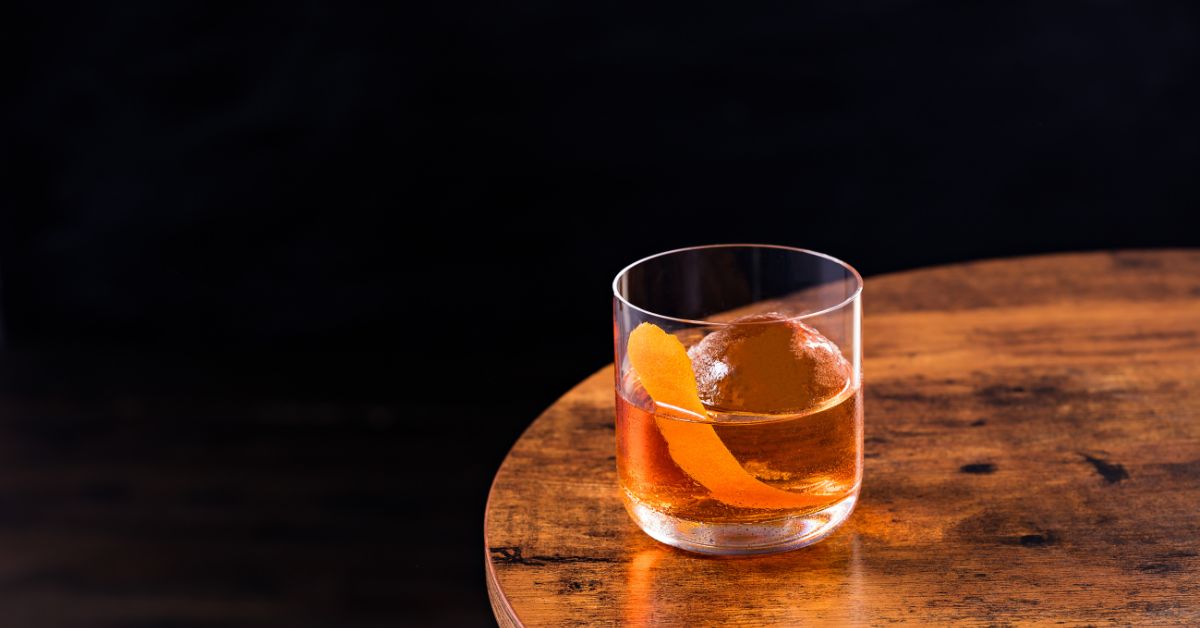

Once you start paying attention to how an Old Fashioned is built, one question comes up fairly quickly: bourbon or rye?
Both work. Both are traditional. But they take the drink in noticeably different directions and since the Old Fashioned is spirit-forward, that difference carries through to every sip.
The short answer: bourbon makes a softer, rounder Old Fashioned with a slightly sweeter finish. Rye makes a drier, spicier version with more edge. Neither is wrong. The choice depends on how you want the drink to feel.
In a lot of cocktails, the spirit plays a supporting role. Citrus, syrups, and other ingredients do much of the heavy lifting, and the whiskey adds depth in the background.
The Old Fashioned doesn't work that way. It's a spirit-forward drink, meaning the whiskey is the foundation, and everything else works around it. The sweetener softens the edges. The bitters add structure. The citrus oil adds aroma. But none of those elements carry the drink on their own.
When you change the whiskey, you're not adjusting one variable. You're shifting the character of the entire cocktail.
| Bourbon | Rye | |
|---|---|---|
| Mash Bill | At least 51% corn | At least 51% rye grain |
| Flavor Profile | Softer, slightly sweet, rounded | Drier, spicier, more structured |
| Finish | Smooth, warm | Sharper, more pronounced |
| Old Fashioned Result | Approachable, easy-drinking | Drier, more complex, more edge |
| Classic Cocktails | Old Fashioned, Mint Julep, Boulevardier | Old Fashioned, Manhattan, Sazerac |
Bourbon’s character is rooted in its origins. Developed in Kentucky in the late 1700s, it’s created from a mash bill that must include at least 51% corn. That corn-heavy grain bill is where much of bourbon's signature character comes from, a natural sweetness that carries through distillation and becomes more pronounced after aging in new charred oak barrels.
In an Old Fashioned, that translates to a drink that feels rounded from the first sip. The vanilla and caramel notes that come through in most bourbons work naturally alongside the demerara syrup, and the overall profile feels cohesive; smooth, warm, without much tension. The sweetness in the whiskey and the sweetness from the syrup point in the same direction.
That quality makes bourbon the more approachable starting point, especially if you're still getting used to spirit-forward drinks. The edges are softer, the flavor is more immediately familiar, and the drink has an easy-drinking quality that doesn't require much adjustment.
Most classic cocktail bars default to bourbon for an Old Fashioned. Buffalo Trace and Maker's Mark are common choices, both bring enough character to hold up in the drink without overpowerin g the other elements.

Rye whiskey has roots in the Northeast and Mid-Atlantic, where rye grain was more readily available than corn in the early days of American distilling. A mash bill that's predominantly rye produces a naturally drier, spice-forward spirit.
In an Old Fashioned, rye changes the dynamic. The sweetness from the syrup is still there, but it feels more restrained. The rye's drier character pushes back against it rather than blending with it. The result is a drink with more defined edges: a bit more spice, a slightly sharper finish, and a flavor profile that feels more complex.
Rye also sits closer to the drink's historical roots; many early versions of the cocktail were built on rye before bourbon became the default. Rye old fashioneds are a common choice in many classic craft cocktail bars today.
Rittenhouse Rye and Willett Rye are reliable choices here, both have enough rye character to shift the drink noticeably without being so aggressive that the other ingredients get lost.

The format of the cocktail stays exactly the same regardless of which whiskey you choose; same ratios, same technique, same proportions. What changes is the experience of drinking it.
A bourbon Old Fashioned tends to feel more relaxed. The flavors fit together easily, and the drink has a warmth that unfolds gradually. It's the kind of cocktail that feels comfortable from the first sip.
A rye Old Fashioned has more tension in the best sense. The spice and the sweetness don't fully merge, they push against each other in a way that keeps the drink interesting from one sip to the next. It asks a little more of the drinker, and it rewards attention.
Neither is a better cocktail. They're genuinely different experiences built from the same four ingredients.
If you're newer to spirit-forward cocktails or making an Old Fashioned for a group with mixed preferences, bourbon is the safer starting point. Its softer profile is more universally approachable, and it leaves less room for the drink to feel sharp or uneven.
If you already drink whiskey regularly and prefer something with more complexity and less sweetness, rye is worth trying. The shift is noticeable, and once you've had a well-made rye Old Fashioned, it's hard not to see it as a different cocktail entirely.
The most useful thing you can do is make the same recipe back-to-back with each; same ratios, same technique, same everything except the whiskey. The difference becomes immediately clear, and you'll know which direction you prefer.
Because the Old Fashioned is so minimal, ingredient quality has nowhere to hide. This applies to the whiskey more than anything else.
You don't need to reach for the most expensive bottle on the shelf. But a whiskey that tastes rough on its own will taste rough in the drink, the sweetener and bitters soften things slightly, but they don't fix a spirit that isn't working. A mid-range bottle you actually enjoy sipping neat will produce a better Old Fashioned than a premium bottle you're indifferent to.
Both have historical precedent. Early versions of the cocktail were often made with rye, which was the dominant American whiskey before Prohibition. Bourbon became the more common default over the 20th century, particularly after Kentucky distillers rebuilt post-Prohibition. Today, either is considered traditional.
Most mid-range bourbons and ryes work well. Look for something with enough character to hold up in a spirit-forward drink, something you'd enjoy on its own. Very light or very heavily peated whiskeys tend to get lost or overwhelmed. Buffalo Trace, Maker's Mark, Rittenhouse Rye, and Bulleit Rye are all reliable starting points.
The standard ratio stays the same: 2 oz whiskey, ¼ oz demerara syrup, 2 dashes bitters. Some drinkers reduce the sweetener slightly when using bourbon, since bourbon already carries more natural sweetness. It's a small adjustment worth experimenting with once you've made the base recipe a few times.
A bourbon Old Fashioned is softer and slightly sweeter, with vanilla and caramel notes that blend naturally with the syrup. A rye Old Fashioned is drier and spicier, with more edge and a more complex, structured finish. Both use the same recipe, the whiskey alone creates the difference.
High-rye bourbons — bourbons with a higher-than-average rye content in their mash bill, sit between the two styles. They carry bourbon's smoothness but with more spice than a standard bourbon. Four Roses Single Barrel and Knob Creek are examples. They're a good middle-ground option if you want characteristics of both.
Bourbon and rye don't compete in an Old Fashioned, they lead to different drinks. Bourbon takes the cocktail somewhere soft and rounded. Rye takes it somewhere drier and more structured. The right choice depends on which direction you want to go.
If you want to remove the guesswork on everything else — the sweetener, the bitters, the ratios — The Mixologer's Old Fashioned cocktail kits come with everything pre-portioned and balanced. You still choose the whiskey. The rest is already dialed in.